Chris Carter · October 26, 2026 · 5 min read · Product Leadership
A Launch Needs an Owner, Not Another Meeting
Alignment becomes useful when it changes a decision. Connect the problem, evidence, release authority, and operating responsibility before calling a team ready.
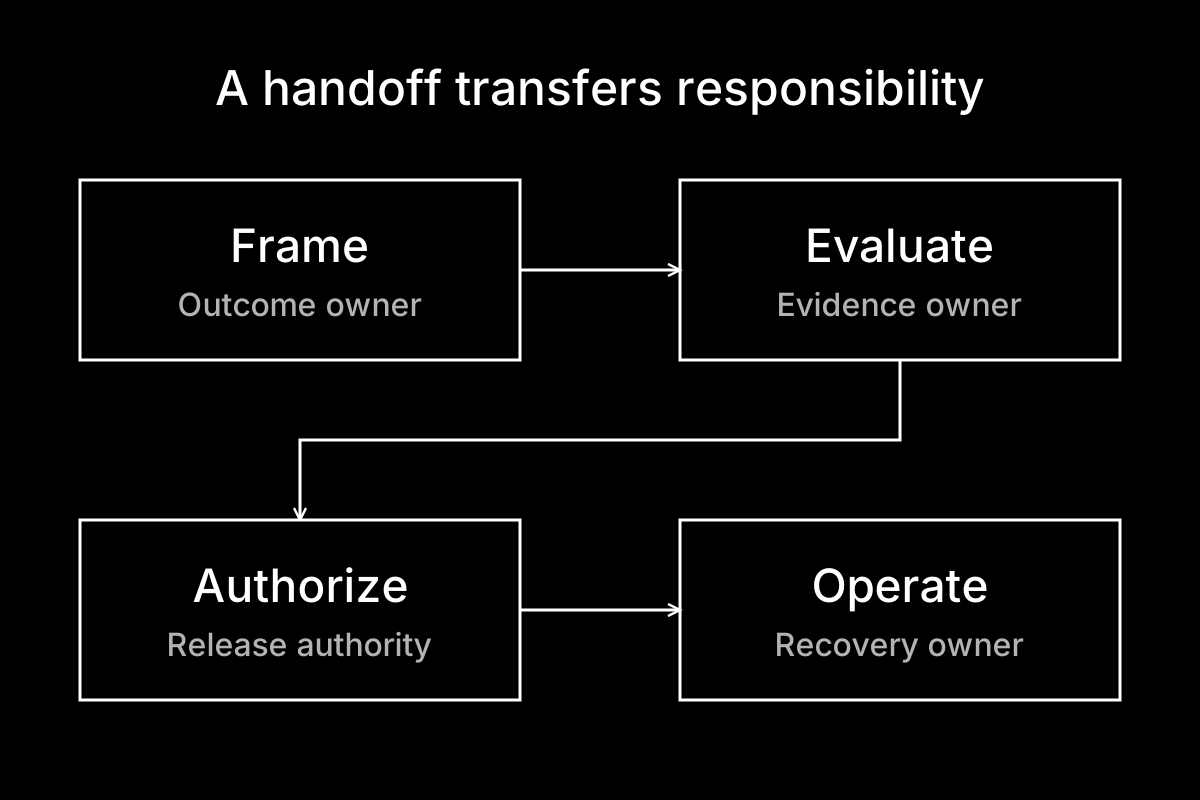
Four named responsibilities form a decision handoff: frame the outcome, evaluate evidence, authorize release, and operate with a recovery owner.
Open diagram at full sizeA conceptual model, not measured performance.
A launch is a chain of decisions
Select a stage. Inspect the evidence, the failure mode, and the leadership decision that moves the work forward.
Are we solving the same problem?
- Evidence to inspect
- Product names the user decision and the desired outcome; design brings the workflow and its exceptions.
- Failure to avoid
- Model capability becomes the strategy, while the actual user need stays ambiguous.
- The leadership call
- Agree on one decision the product should improve, plus a non-goal that protects focus.
An illustrative decision framework, not a prescribed approval process. Adapt ownership and evidence to your organization.
Attendance is not accountability.
A launch meeting can end with everyone informed and nobody authorized to make the call. Product thinks engineering accepted the limitations. Engineering thinks the business accepted the risk. Operations discovers the support burden after release. Adding another meeting does not resolve a missing decision right.
The leadership move is to distinguish participation from accountability. Many people should contribute evidence and challenge assumptions. A particular person or established governance body must still own each decision. That authority must be real, not a name attached to a slide.
Use a chain of decisions, not a chain of presentations.
The explorer separates four responsibilities: frame, evaluate, authorize, and operate. They are not mandatory departments or a waterfall. A small team may hold several responsibilities; a regulated organization may need additional gates. The separation makes it possible to ask which decision is actually blocked.
If the user outcome is unclear, more evaluation data may not help. If consequential failure cases are unexplored, an executive endorsement does not fill the gap. If nobody can operate the system, a successful demo does not make it ready. Locate the missing decision before increasing activity around it.
Make disagreement inspectable.
When teams disagree, record the competing claims and the evidence that could resolve them. 'Not ready' is too broad. 'We have not tested the permission boundary for this user group' identifies a reviewable gap. 'The model is accurate' is too broad too. Accurate on which tasks, with which exceptions, and at what cost when it fails?
A useful decision record names the chosen scope, alternatives rejected, remaining uncertainty, and conditions for reconsideration. It preserves the reasoning without pretending the choice was inevitable. It also protects the team from relitigating a settled question every time a new stakeholder enters the conversation.
The handoff is complete when someone can act.
A document sent is not necessarily responsibility transferred. The receiving owner needs access, context, capacity, and permission to intervene. Ask what they would do if a known failure appeared tomorrow. If the answer depends on finding the original project team, the operating model is unfinished.
This is where a director can create leverage without becoming the approval bottleneck. Make decision rights legible, ensure evidence reaches the right owner, and create an escalation path for genuine conflicts. The goal is not to make every decision personally. It is to make good decisions possible when you are not in the room.
The decision handoff
- 01Frame: name the user decision, intended outcome, non-goal, and person accountable for scope.
- 02Evaluate: identify the evidence owner, representative cases, and failure categories that matter.
- 03Authorize: record who can accept the remaining risk, under which conditions, and who can stop release.
- 04Operate: assign monitoring, user correction, escalation, and recovery responsibilities.
- 05For each handoff, record the unresolved question and the evidence that would change the decision.
Implement fast
- Replace one status update with a review of the next unresolved decision.
- Ask the receiving owner to explain the evidence and limits back to the team.
- Leave with a recorded decision or a specific evidence gap, not an implied approval.
Sources and further reading
More articles
All articles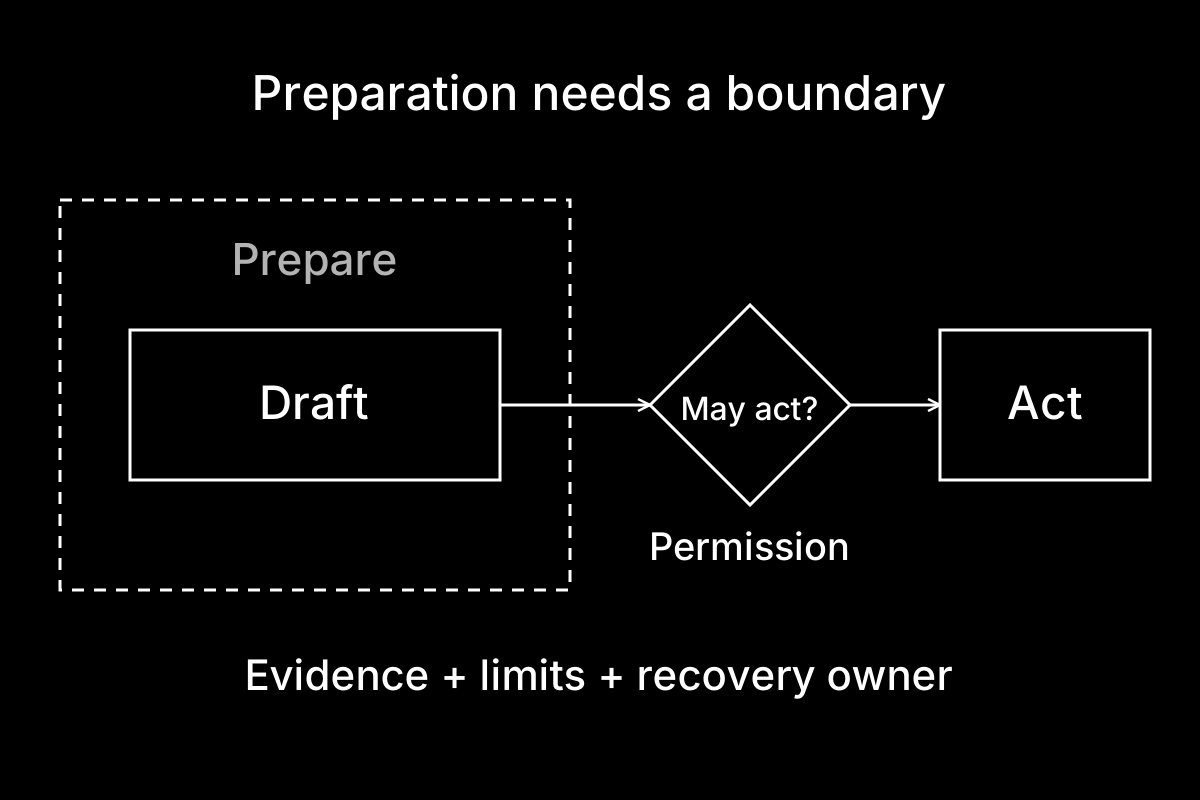
AI Leadership
October 26, 2026
5 min read
Delegation Is a Product Decision
An agent's ability to act is not permission to act. Design the boundary between preparing a decision and making one.
Read the essay and explore the idea
Design Leadership
October 26, 2026
5 min read
A Design System Needs Evidence Before Scale
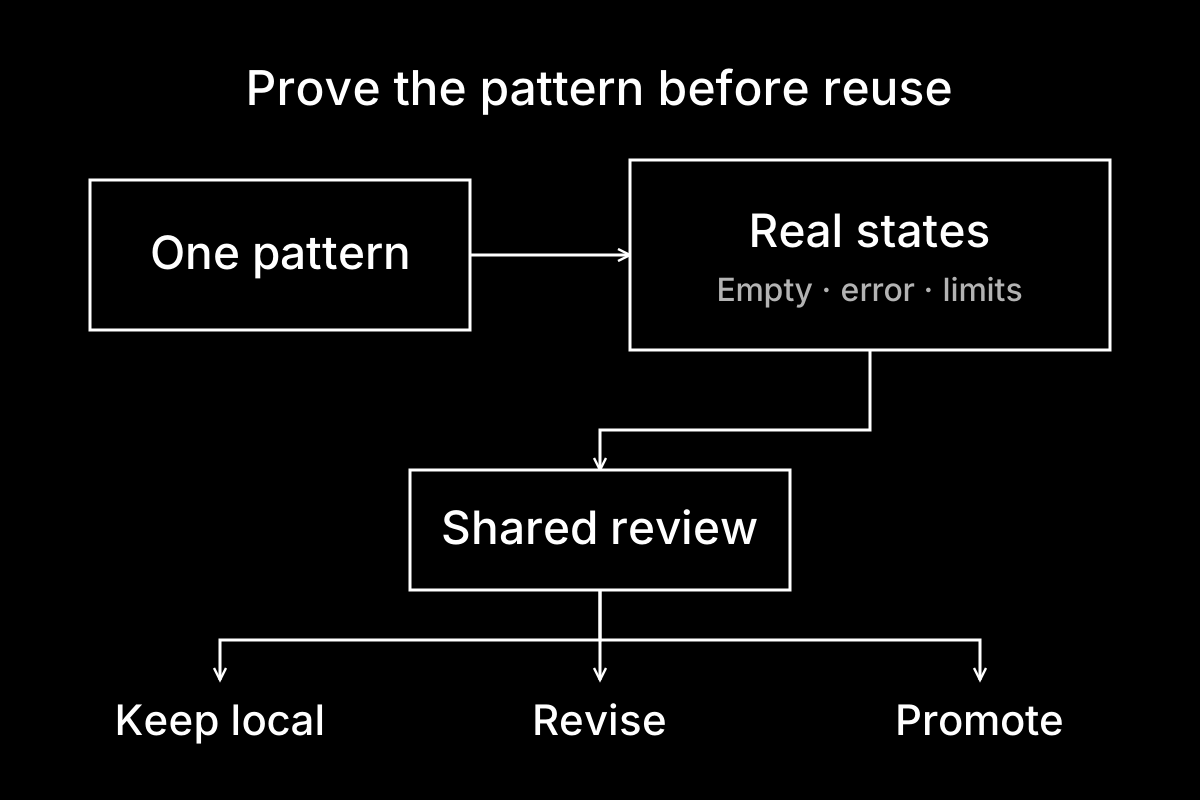
Consistency is not enough. Before multiplying a pattern across a product, prove that it survives real states, real constraints, and shared review.
Read the essay and explore the idea
AI Design Systems
May 21, 2026
12 min read
Use Figma as the Napkin, Not the Finish Line
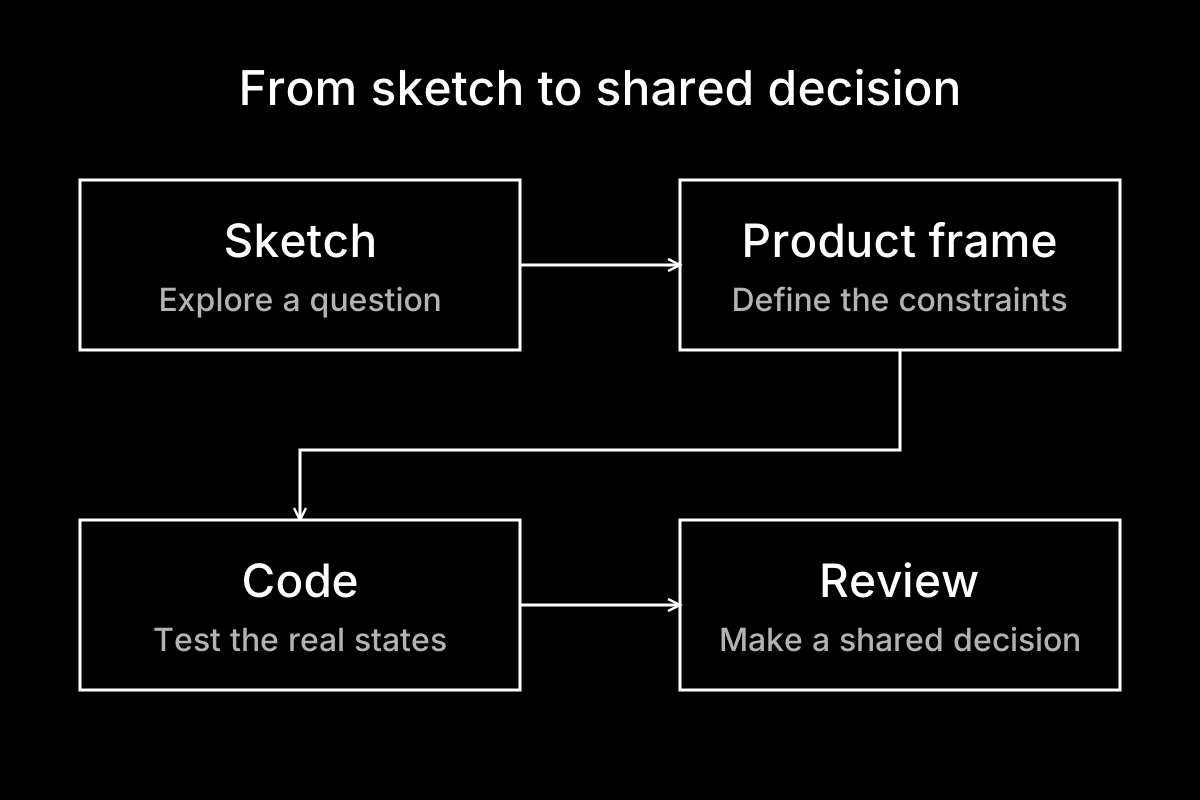
AI can generate a screen, but production-minded design starts when the work moves into coded systems, scenario data, review paths, and pull requests.
Read the essay and explore the idea