Chris Carter · October 26, 2026 · 5 min read · Design Leadership
A Design System Needs Evidence Before Scale
Consistency is not enough. Before multiplying a pattern across a product, prove that it survives real states, real constraints, and shared review.
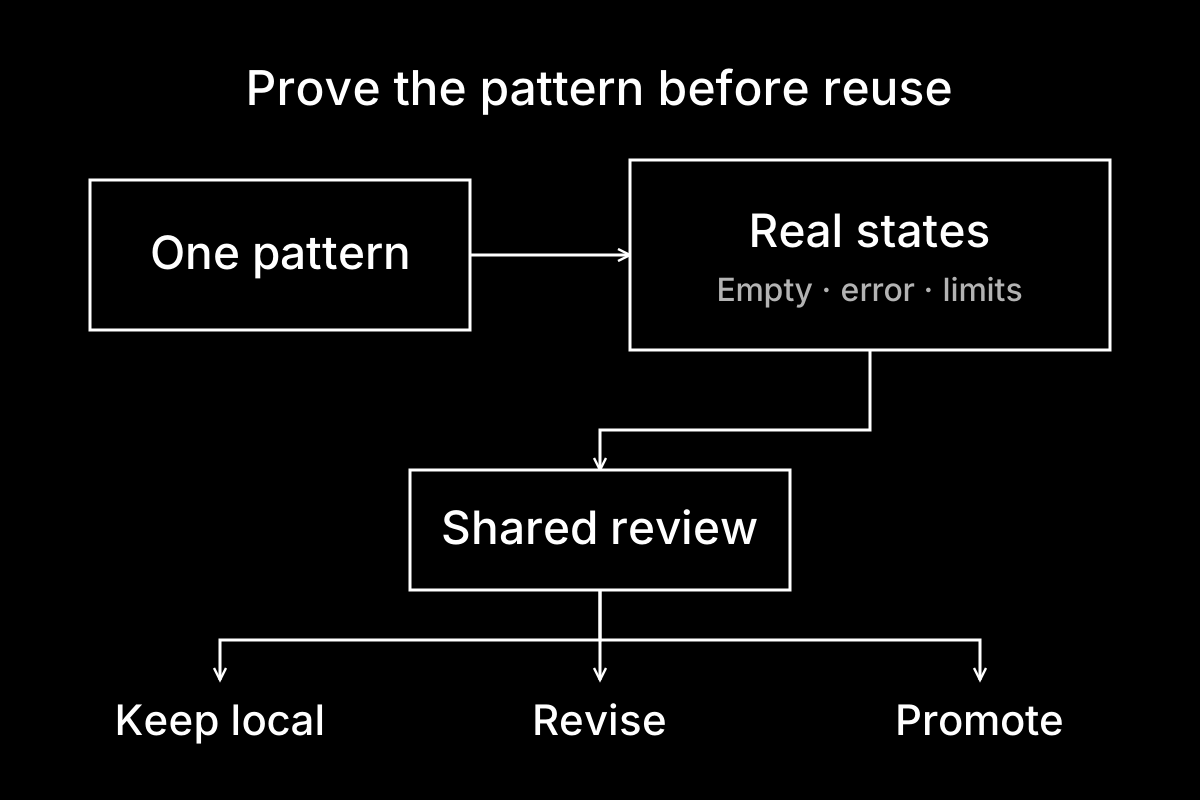
A candidate pattern is tested against empty, error, and permission states. Shared review then decides whether to keep it local, revise it, or promote it.
Open diagram at full sizeA conceptual model, not measured performance.
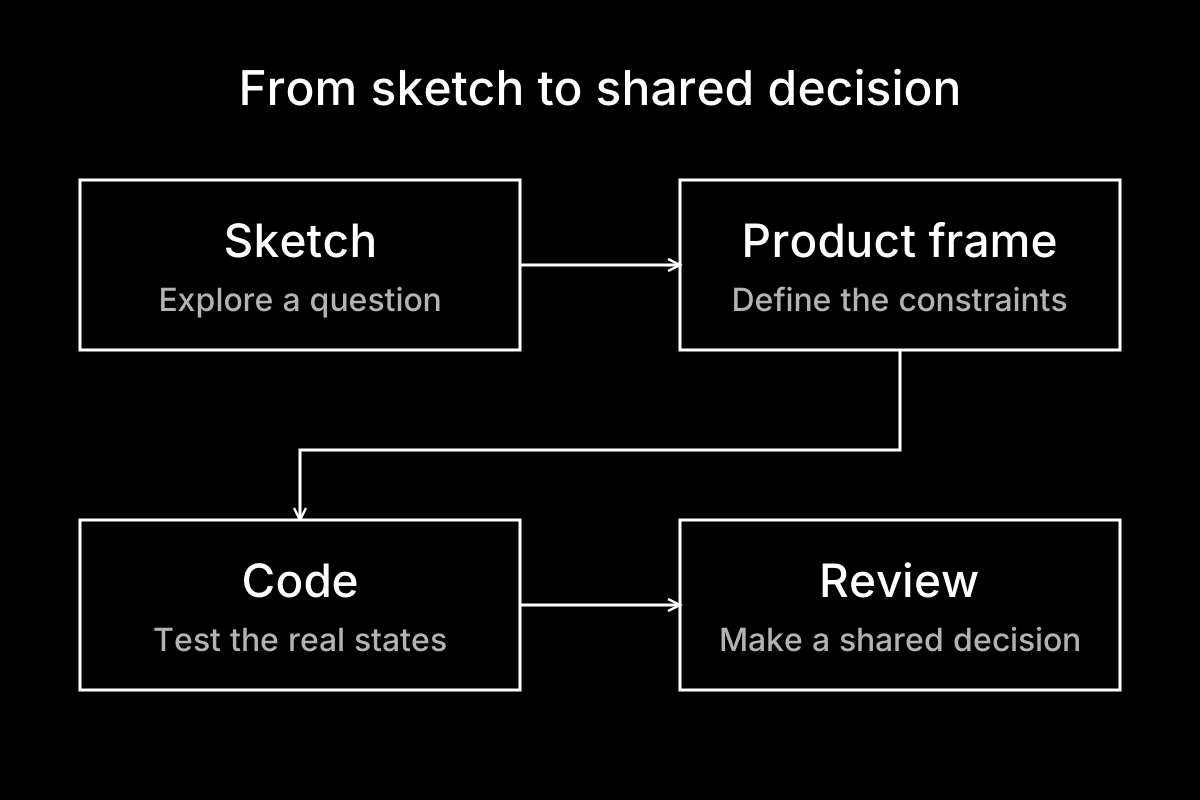
From sketch to shared decision
Select a stage. Inspect the evidence, the failure mode, and the leadership decision that moves the work forward.
Which uncertainty is this sketch helping us resolve?
- Evidence to inspect
- A visible hypothesis, an intended user, and the question the team cannot yet answer.
- Failure to avoid
- A polished screen becomes a commitment before the problem has been agreed.
- The leadership call
- Keep the sketch cheap. Move forward when the team can name what it needs to learn.
An illustrative decision framework, not a prescribed approval process. Adapt ownership and evidence to your organization.
Reuse multiplies the decision you made.
A shared component can spread a good solution. It can also spread an assumption that only worked in one screen. Visual consistency is easy to notice; missing states, unclear ownership, and unsuitable interaction models are easier to distribute unnoticed.
The question before standardization is not simply whether two interfaces look alike. It is whether they serve the same user need under compatible constraints. A pattern deserves reuse when its behavior and boundaries can be explained, not just when its pixels can be matched.
Keep the sketch cheap until the question is clear.
The first two stages in the explorer separate a sketch from a product frame. A sketch helps a team think. A product frame names what it needs to learn, for whom, and within which constraints. Treating the sketch as a commitment skips that distinction and makes later corrections feel like rework instead of discovery.
A principal designer should be able to explain the intended behavior change and the evidence that would justify further investment. That does not require pretending every early question has a numerical answer. It requires making uncertainty explicit enough that the team can choose the next useful test.
Review the state nobody put in the presentation.
Coded-system and scenario-data reviews test different things. The first asks whether the pattern uses the real components, tokens, semantics, and interaction behavior. The second asks whether the experience holds together when content is long, information is absent, permission is limited, or a user needs to recover.
Use clearly synthetic examples to expose those conditions without importing private data. An empty state may reveal that the workflow needs onboarding. A permission boundary may reveal that the apparent design problem is actually an access decision. These are product findings, not cosmetic defects to defer until polish.
Promotion is a leadership decision.
A pattern can remain local, be revised, or become shared. Each choice has a cost. Keeping everything local creates duplication; promoting everything creates coordination overhead and a system full of exceptions. The review should weigh recurring need, behavioral fit, maintenance, and the burden on consuming teams.
Before promotion, name the owner, document when not to use the pattern, and make the migration path credible. Shared review should end with a decision and its rationale, not a larger pile of comments. The system earns authority by making teams more capable, not by requiring every team to ask permission for every screen.
The pattern promotion record
- 01Name the recurring user problem and the contexts where this pattern should not be used.
- 02Record the product hypothesis, constraints, and decision owner before implementation.
- 03Inspect the coded component, tokens, keyboard behavior, and non-default states.
- 04Review synthetic scenarios for missing data, long content, permission limits, and recovery.
- 05Decide whether to keep local, revise, or promote. Record ownership, migration needs, and exceptions.
Implement fast
- Choose one pattern proposed for reuse and run it through the five stages above.
- Invite a consuming team to review the awkward scenario, not only the default screen.
- Capture one explicit non-goal and one condition that would prevent promotion into the shared system.
Sources and further reading
More articles
All articles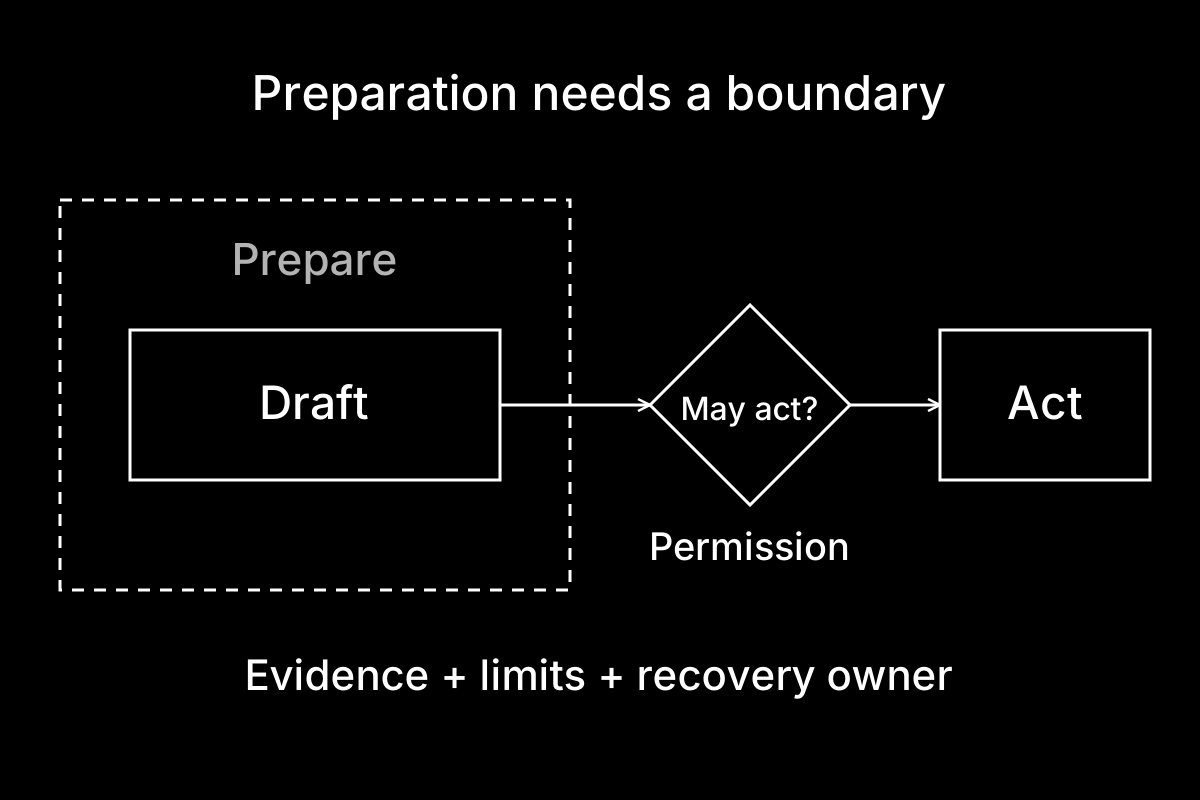
AI Leadership
October 26, 2026
5 min read
Delegation Is a Product Decision
An agent's ability to act is not permission to act. Design the boundary between preparing a decision and making one.
Read the essay and explore the idea
Product Leadership
October 26, 2026
5 min read
A Launch Needs an Owner, Not Another Meeting
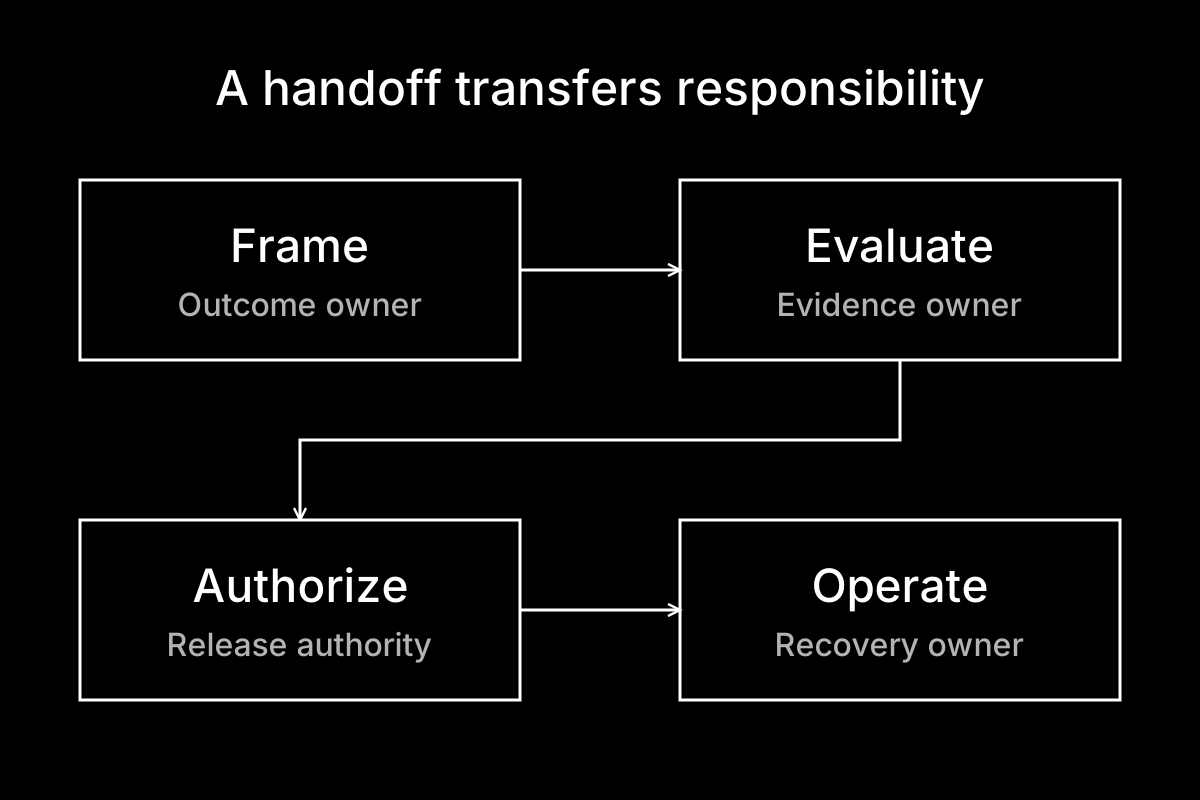
Alignment becomes useful when it changes a decision. Connect the problem, evidence, release authority, and operating responsibility before calling a team ready.
Read the essay and explore the idea
AI Design Systems
May 21, 2026
12 min read
Use Figma as the Napkin, Not the Finish Line
AI can generate a screen, but production-minded design starts when the work moves into coded systems, scenario data, review paths, and pull requests.
Read the essay and explore the idea