Enterprise AI Is Mostly Coordination
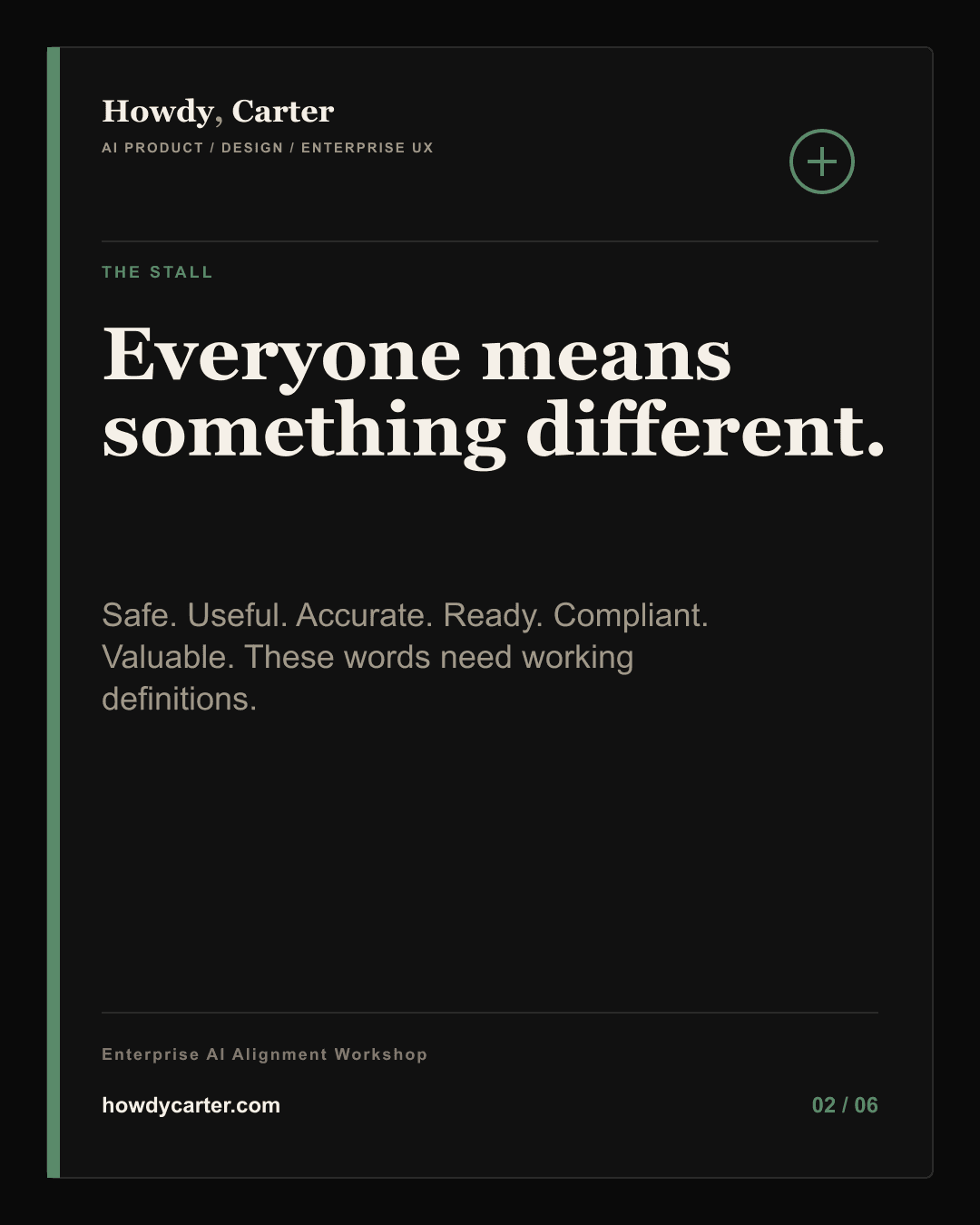
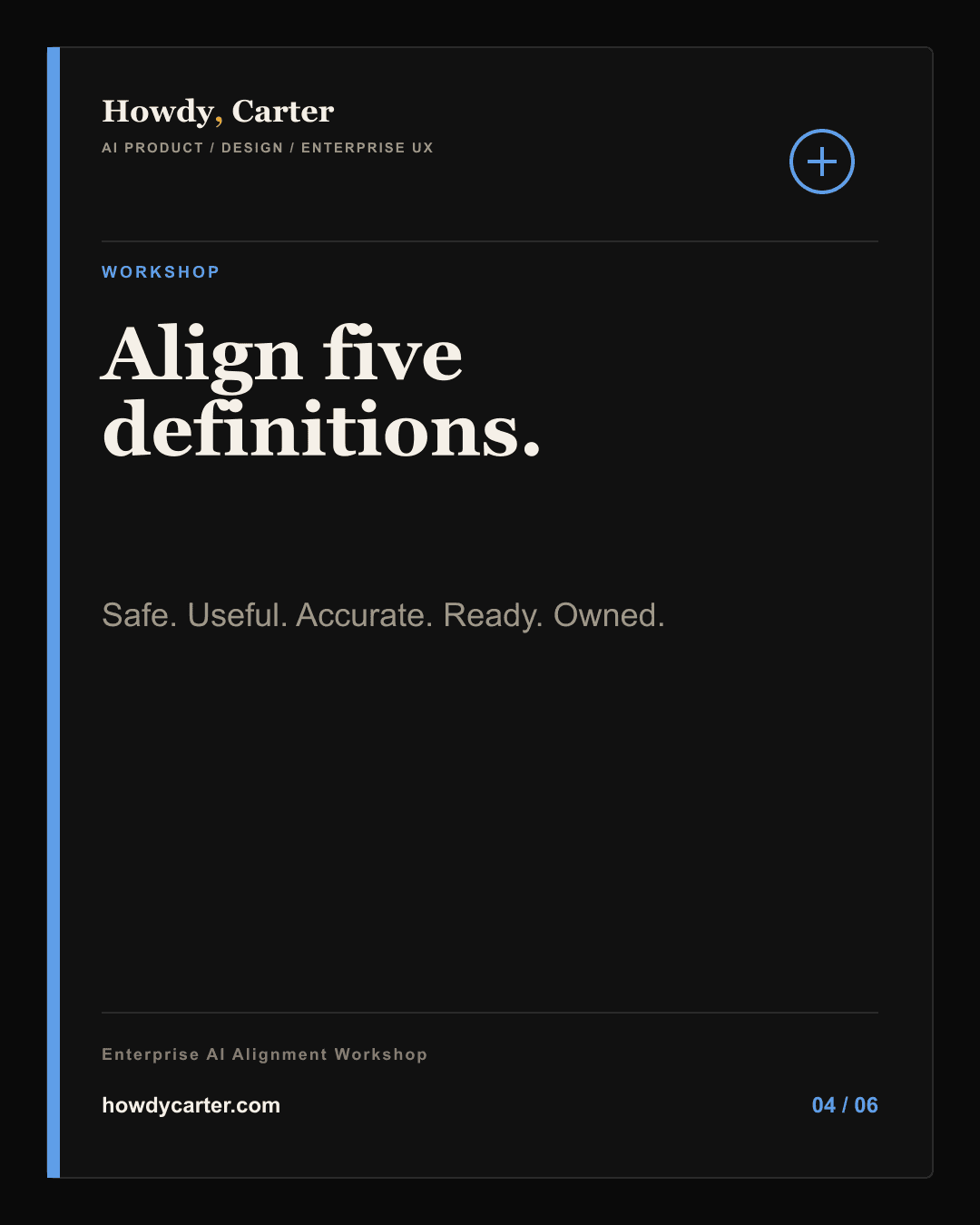
The model matters. The architecture matters. But enterprise AI usually stalls when teams do not share definitions for safe, useful, accurate, ready, and owned.
Reusable artifact
Enterprise AI Alignment Workshop
- 01Define safe in operational terms.
- 02Define useful from the user's task, not the model capability.
- 03Define accurate with an eval method and acceptable error boundary.
- 04Define ready with launch gates, monitoring, and escalation.
- 05Define owned with names, decision rights, and support responsibility.
Implement fast
- Run a 60-minute alignment session before the architecture review.
- Write the five definitions on one page.
- Turn each definition into a launch gate.
- Assign one owner for each gate and one learning milestone for the next two weeks.
The stall often looks technical. It is usually social.
Enterprise AI projects can look healthy for a long time. There is a model. There is a prototype. There is a roadmap. There are impressive demos. Then the work slows down because product, engineering, legal, risk, operations, executives, and users are using the same words to mean different things.
Safe means one thing to legal, another thing to security, another thing to operations, and another thing to the person who has to use the output. Useful means one thing in a strategy deck and another thing in the actual workflow. Ready can mean technically possible, commercially attractive, approved, monitored, or supported. If the team does not align those definitions, every later decision gets heavier.
The market is building control planes.
Microsoft's Agent 365 positioning is a clear sign of where enterprise AI is going: agent sprawl needs governance, ownership, observability, and lifecycle management. Anthropic's finance-agent templates and enterprise services push in the same direction from another angle: packaged workflows, domain evidence, and embedded implementation capability.
My take is simple: the next phase of enterprise AI is not more random pilots. It is operating-model design. Who owns the agent? What can it access? What can it do? What does it log? When does it stop? Who reviews exceptions? What proves it is creating value?
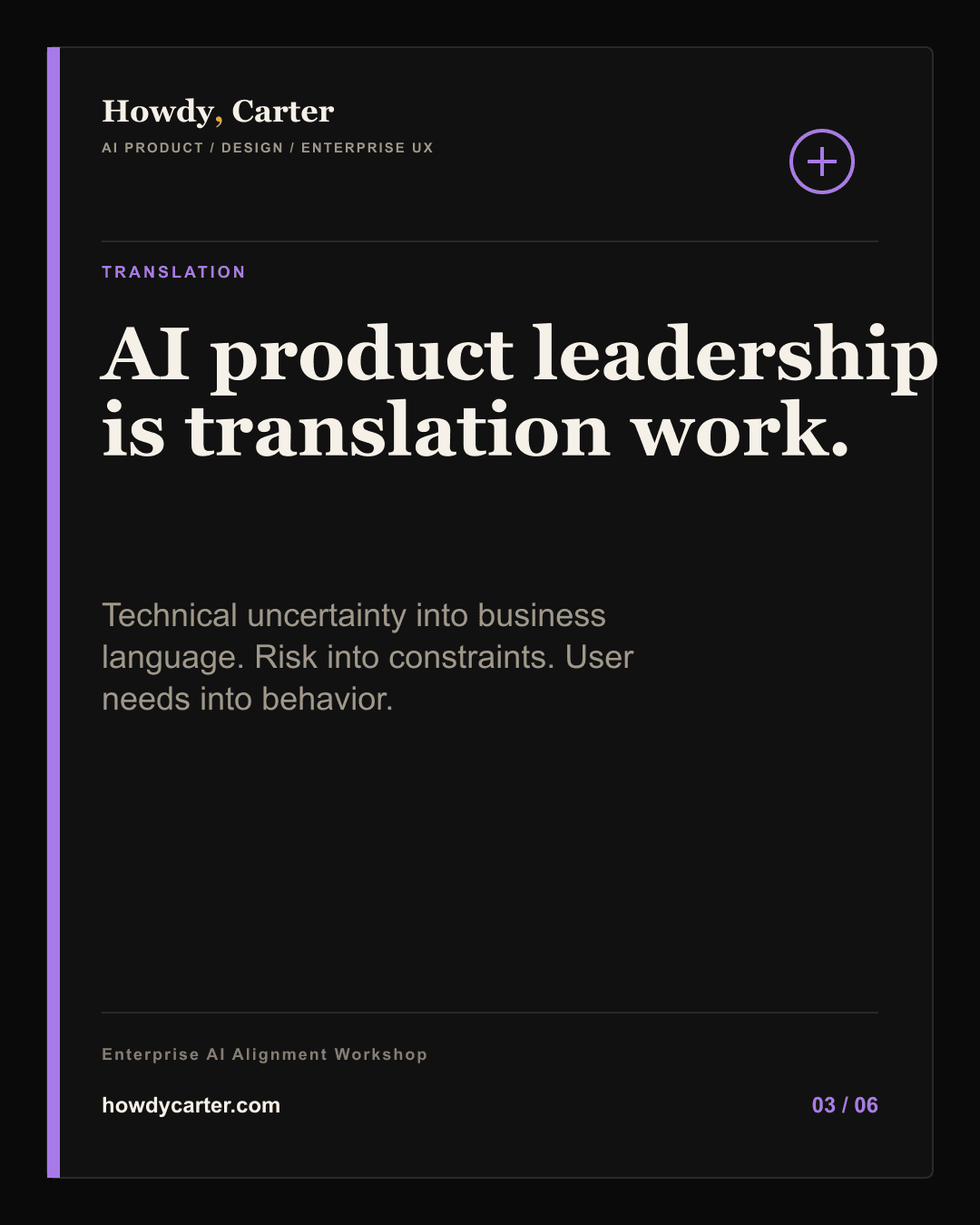
AI product leadership is translation work.
The AI product leader has to turn technical uncertainty into business language, business ambition into scoped product decisions, risk concerns into design constraints, and user needs into measurable behavior.
This is not soft work. This is the work that determines whether a system gets adopted. The model may create the output, but the coordination layer creates the conditions for trust.
Use definitions as launch gates.
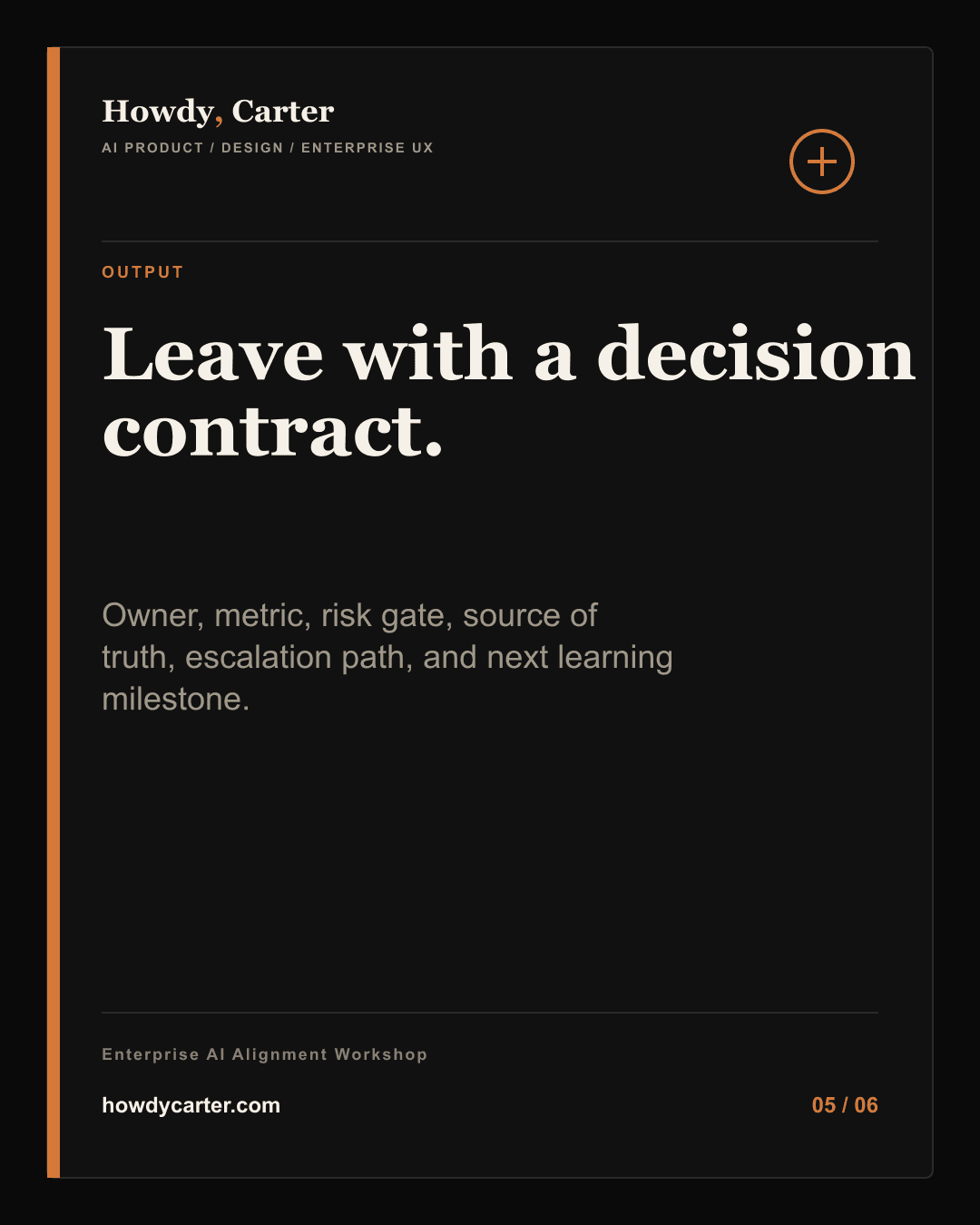
The fastest practical move is a definition alignment workshop. Define safe, useful, accurate, ready, and owned. Then turn each definition into a gate. If safe means permission-aware and auditable, the gate is not a vague safety review. It is a permissions test and an audit-log requirement. If useful means reducing manual research time by 30 percent, the gate is a time-on-task measure.
Definitions become valuable when they change what the team builds, measures, and refuses to ship.
Social carousel
The shareable artifact