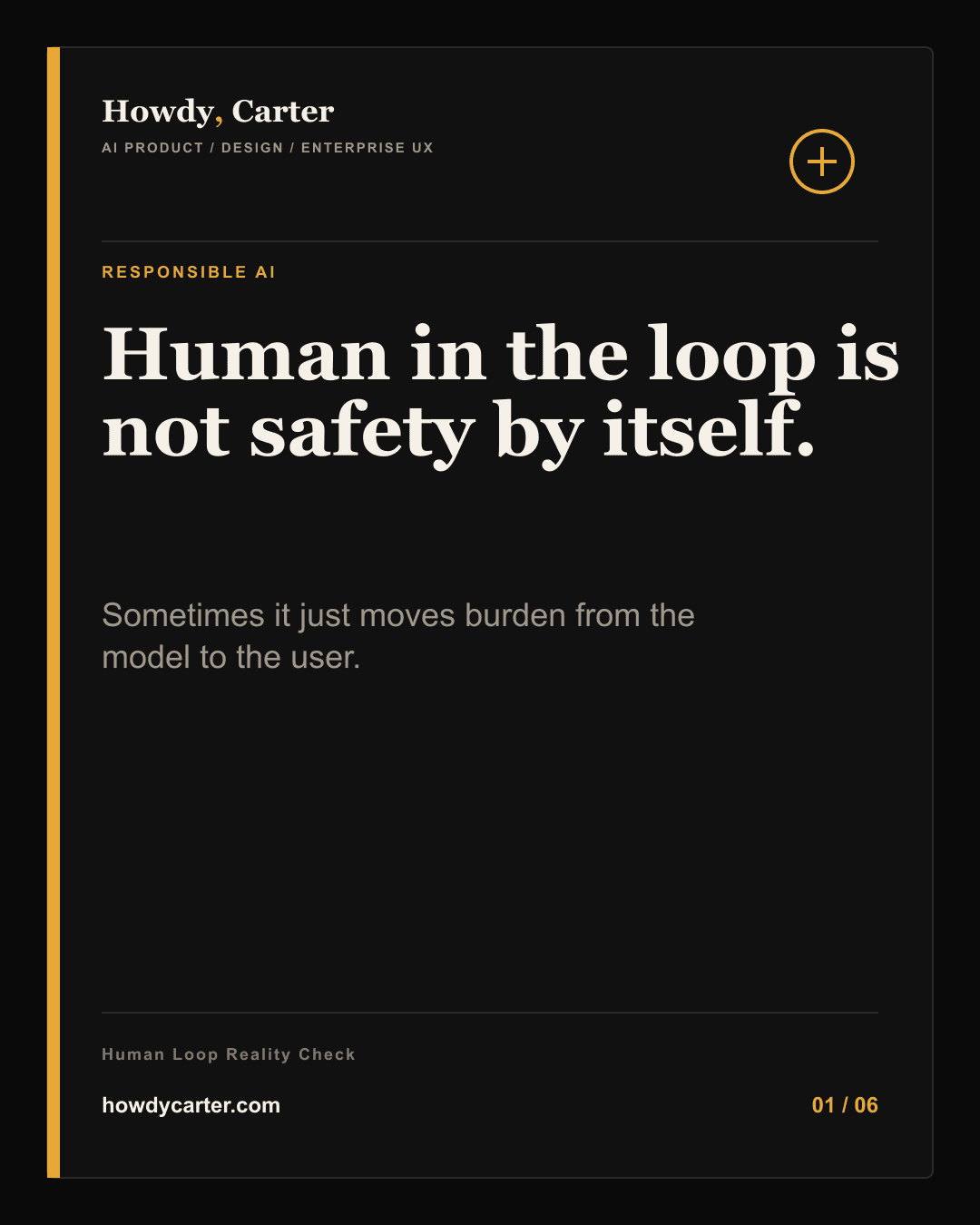
Human in the Loop Is Not Safety by Itself
A human reviewer is not a meaningful control if the product makes the important errors hard to see, too expensive to catch, or impossible to correct.
Reusable artifact
Human Loop Reality Check
- 01Define the human responsibility: approve, reject, correct, escalate, or audit.
- 02List the evidence the reviewer needs before making that judgment.
- 03Name the subtle errors a reviewer is likely to miss.
- 04Set a realistic review-time expectation.
- 05Decide how overrides become product, model, policy, or training improvements.
Implement fast
- Take one review queue or proposed approval step.
- Shadow five real reviews and write down what evidence was missing.
- Add one evidence panel or source comparison before expanding automation.
- Track overrides by reason, not just count.
The phrase can create false comfort.
Human in the loop sounds responsible. Sometimes it is. Sometimes it is just a nice phrase for moving burden from the model to a person who is under-informed, overloaded, and expected to catch errors the interface does not make visible.
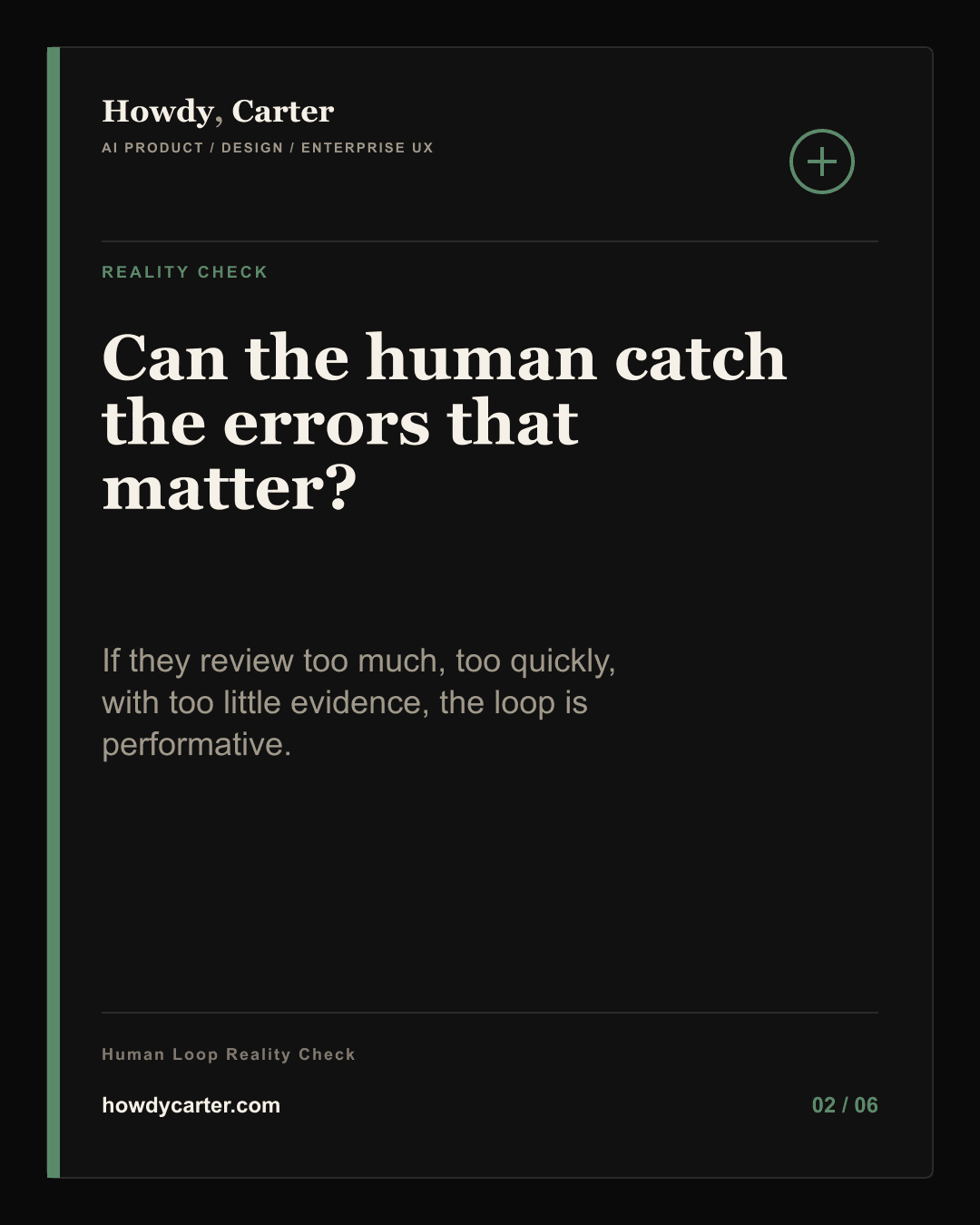
The question is not whether a human is technically involved. The question is whether that human can realistically catch the errors that matter. If the answer is no, the loop is not a safety strategy. It is a liability with a human face on it.
Security and safety have to move earlier.
OpenAI Daybreak is another signal that AI work is moving toward safer systems by design. I read that less as a cybersecurity-only story and more as a product-operating-model story. Safety cannot be a late-stage review ceremony. It has to shape the way work is designed, generated, inspected, logged, and repaired.
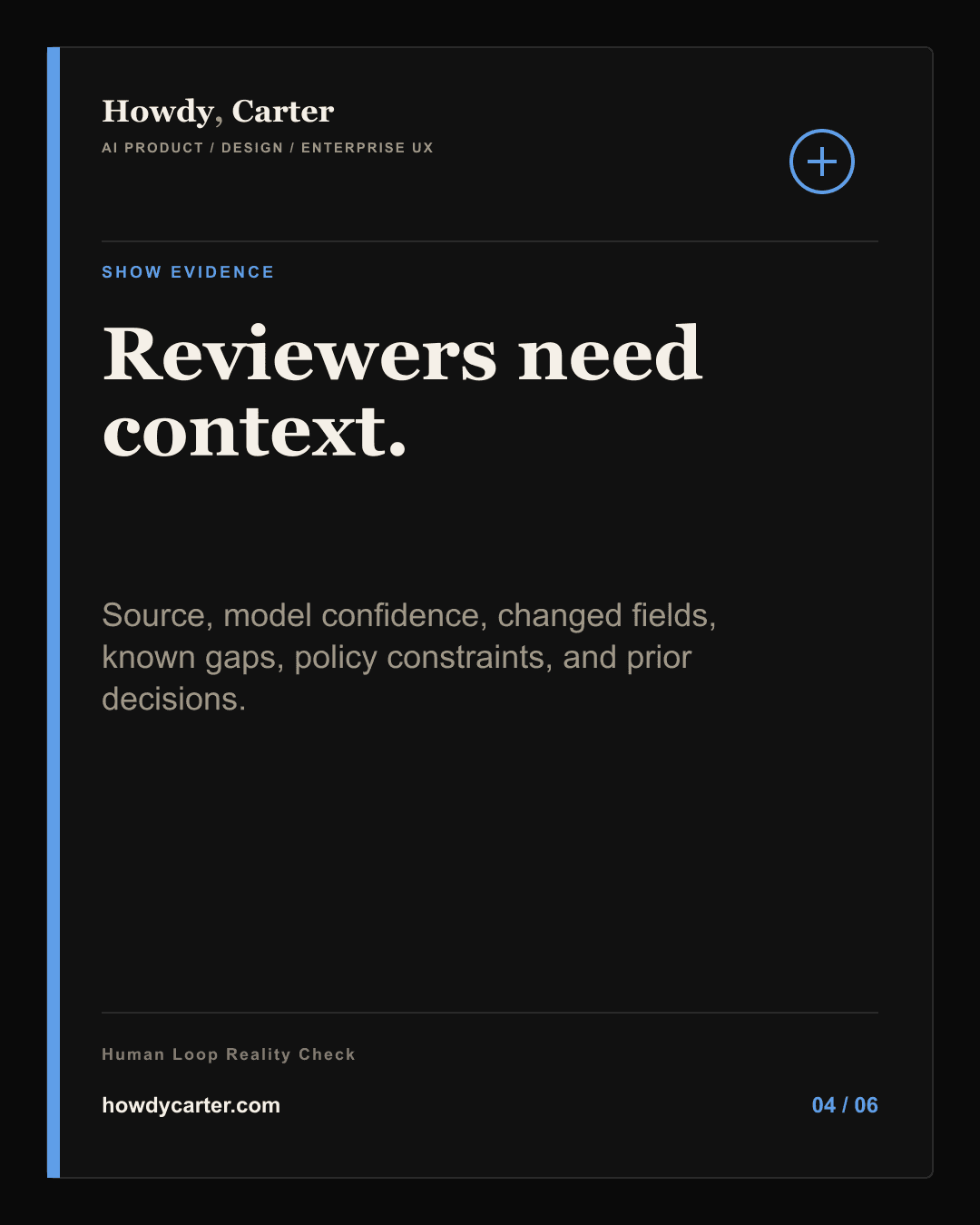
The same is true for human review. A reviewer needs source context, policy context, model behavior, confidence signals, change history, and a way to give feedback that improves the system. Without that, the human is being asked to act as a safety net without being given the net.
Design the review job.
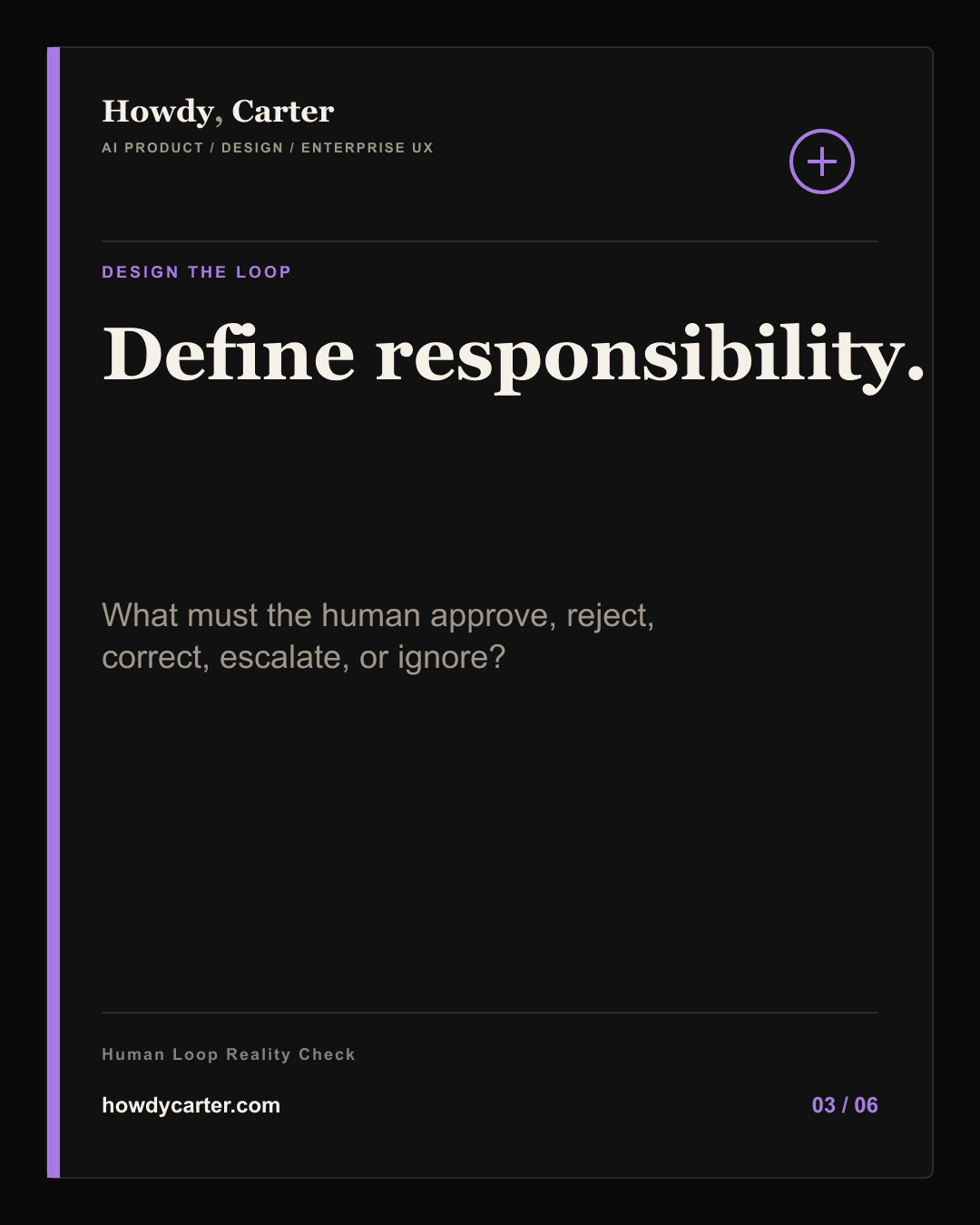
A useful review loop starts by defining the job. Is the reviewer approving a recommendation, correcting extracted data, catching policy violations, deciding whether to escalate, or auditing the system after the fact? Each job needs a different interface and a different metric.
If you do not define the job, the product defaults to asking the human to review everything. That creates fatigue, slows down adoption, and trains teams to ignore the control. A safety mechanism that people learn to bypass is not safety.
Feedback has to become learning.
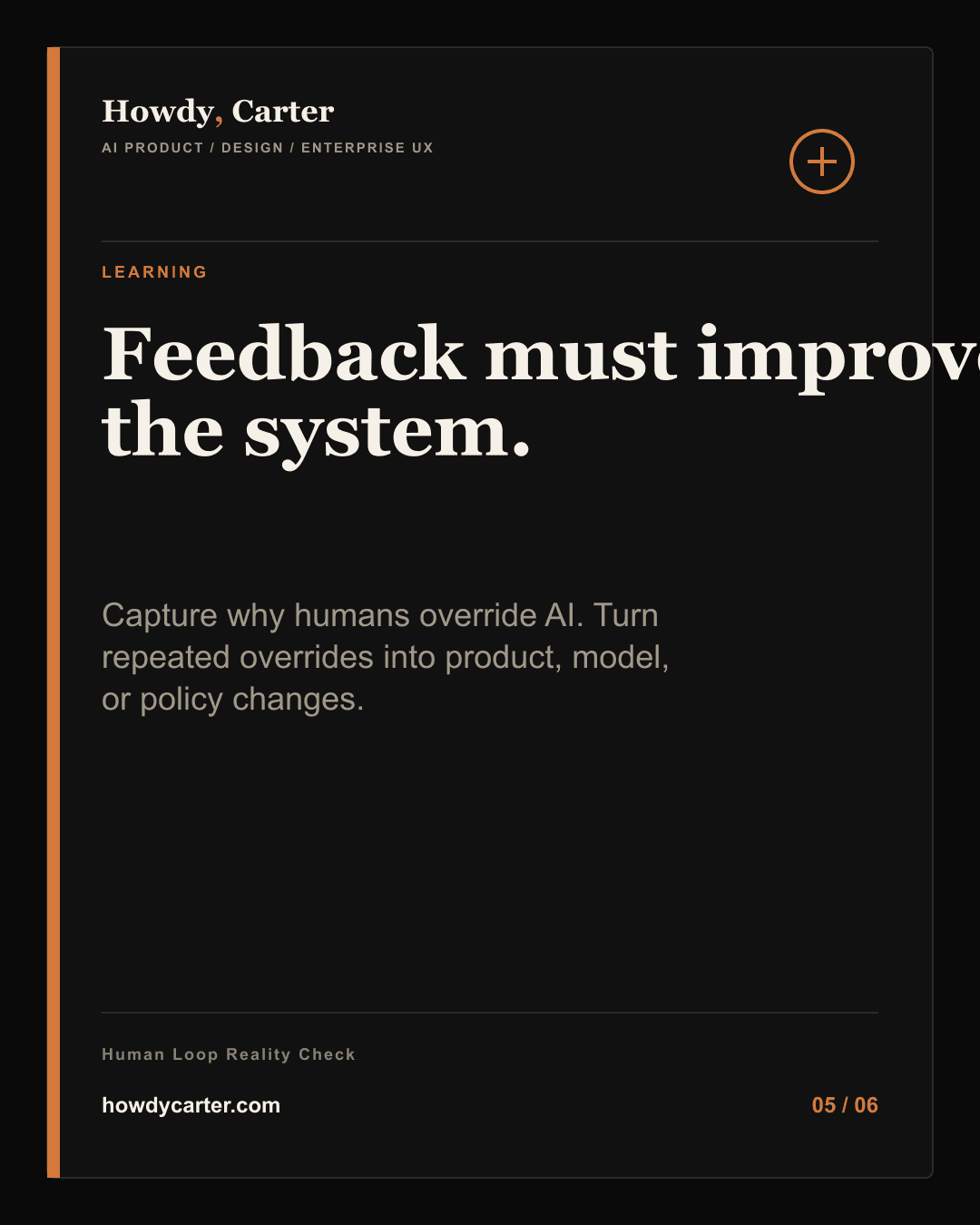
The best review loops capture why people override AI. Was the source stale? Was the policy unclear? Did the model misunderstand intent? Was the workflow asking for a decision too early? Those reasons are product signals.
Repeated overrides should create a backlog. Some items belong to model tuning, some to prompt or retrieval changes, some to policy clarification, and some to product design. The loop becomes valuable when human judgment changes the system, not just the individual output.
Social carousel
The shareable artifact